

Space & Exploration
How Apollo Artefacts Enter Private Collections
Apollo material can be privately owned, but the route into private hands matters. The strongest examples carry a chain of title that can be followed back to NASA, an astronaut, a contractor or another documented source.
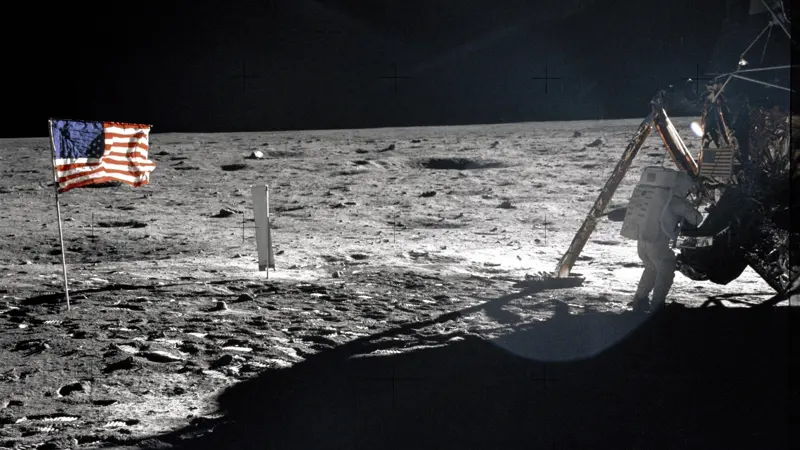
Apollo collecting is complicated by a simple fact. “NASA” on an object does not tell you who was entitled to own it.
The Apollo programme generated government property, contractor material, expendable flight equipment, presentation pieces, personal items carried by astronauts and objects that were formally transferred to museums. Some categories can legitimately appear on the private market. Others should not be assumed to be transferable at all.
For a collector, the important question is therefore not only whether an object is authentic. It is how that particular object left institutional control and entered the private chain of ownership.
Astronaut-owned material has a specific legal history
In 2012 the United States enacted Public Law 112-185 to confirm ownership rights for certain artefacts received by astronauts who participated in Mercury, Gemini and Apollo through the Apollo-Soyuz Test Project.
The law covers defined categories of expendable, disposable and personal-use items that were not expressly required to be returned to NASA. It specifically includes examples such as personal logs, checklists, flight manuals, some training material and disposable flight hardware salvaged from jettisoned lunar modules.
It does not include lunar rocks or other lunar material.
That distinction matters. A sales description saying that something came from an astronaut estate is useful evidence of provenance, but the character of the object still needs to fit the legal route by which it could have been privately retained.
Personal Preference Kit material is different from major programme hardware
NASA’s current artefact policy distinguishes significant agency artefacts from ordinary memorabilia and sets out institutional routes for preserving historic aerospace material.
The latter category could include flags, insignia and other small items carried for presentation or personal reasons. These are among the reasons flown Apollo material appears legitimately in private collections.
A collector should still expect evidence linking the individual object to the mission. That evidence might include an astronaut-signed certification, contemporary manifests, mission records, an earlier auction catalogue, estate documentation or a combination of sources.
A statement that an item is “Apollo era” is not the same as evidence that it was flown.
The best provenance is cumulative
No single certificate makes an Apollo object beyond question.
The strongest files usually contain several independent points of agreement. The physical object should be correct for the period and function. Serial numbers or part numbers should make sense. Documentary records should identify the object or an identifiable group from which it came. The ownership chain should then continue without unexplained jumps.
This is particularly important with small consumables and pieces of flight hardware. A component can be exactly the type used on Apollo while never having flown. Training equipment, spares and test articles are historically important in their own right, but they should not inherit a flight history merely because they resemble flown examples.
NASA’s own history resources note another difficulty. Detailed packing lists were not required throughout the earliest period of human spaceflight. Absence from a manifest can therefore require careful interpretation rather than an automatic conclusion either way.
Institutional transfer is another legitimate route, but it is not a free market
NASA and the Smithsonian have formal systems for preserving historically important aerospace material. Major spacecraft and significant programme artefacts were transferred into public collections. NASA also has procedures for identifying and disposing of artefacts through institutional channels.
That does not mean surplus government hardware found on the market is automatically private property. Government property rules and the history of the particular item still matter.
The Smithsonian’s Apollo 11 Command Module, for example, was formally transferred from NASA. The National Air and Space Museum also describes a formal process for deaccessioned objects, with transfers directed to qualified museums and educational organisations rather than an assumption that historic federal material enters ordinary private commerce.
The Armstrong Purse shows why object-level research matters
One of the most instructive Apollo provenance stories concerns a white temporary stowage bag found by Neil Armstrong’s family after his death.
The bag contained hardware from the Lunar Module Eagle. Researchers compared the objects with mission photography and documentation and concluded with very high confidence that the items had been brought back from the lunar module even though they had been scheduled to remain behind.
The family donated the material to the National Air and Space Museum.
The importance of the story is not that every undocumented astronaut object can be rescued by expert opinion. It is the opposite. The conclusion became persuasive because the physical evidence, mission records, photography and ownership history could be studied together.
What we would want to see before acquiring Apollo material
For a flown object, we would want the claimed mission status supported by more than a dealer’s certificate. The ideal file starts as close as possible to the astronaut, NASA, contractor or recognised institution and then documents each subsequent transfer.
For an astronaut-associated object, estate provenance can be powerful when the chain is clear.
For contractor and programme hardware, part numbers, inspection stamps, manufacturing records and evidence of lawful disposal become more important.
For presentation flags, covers and similar flown mementos, mission-specific records and contemporary presentation documentation can be decisive.
Lunar samples require a different level of caution. Public Law 112-185 expressly excludes lunar rocks and other lunar material from the astronaut ownership rights it confirms.
The principle is simple. Apollo material is collectible, but “flown”, “used” and “owned” are separate claims. Each one needs its own evidence.
See the Space & Exploration collection for the way we catalogue mission and exploration material.
Sources consulted
Related collection
Space & Exploration