
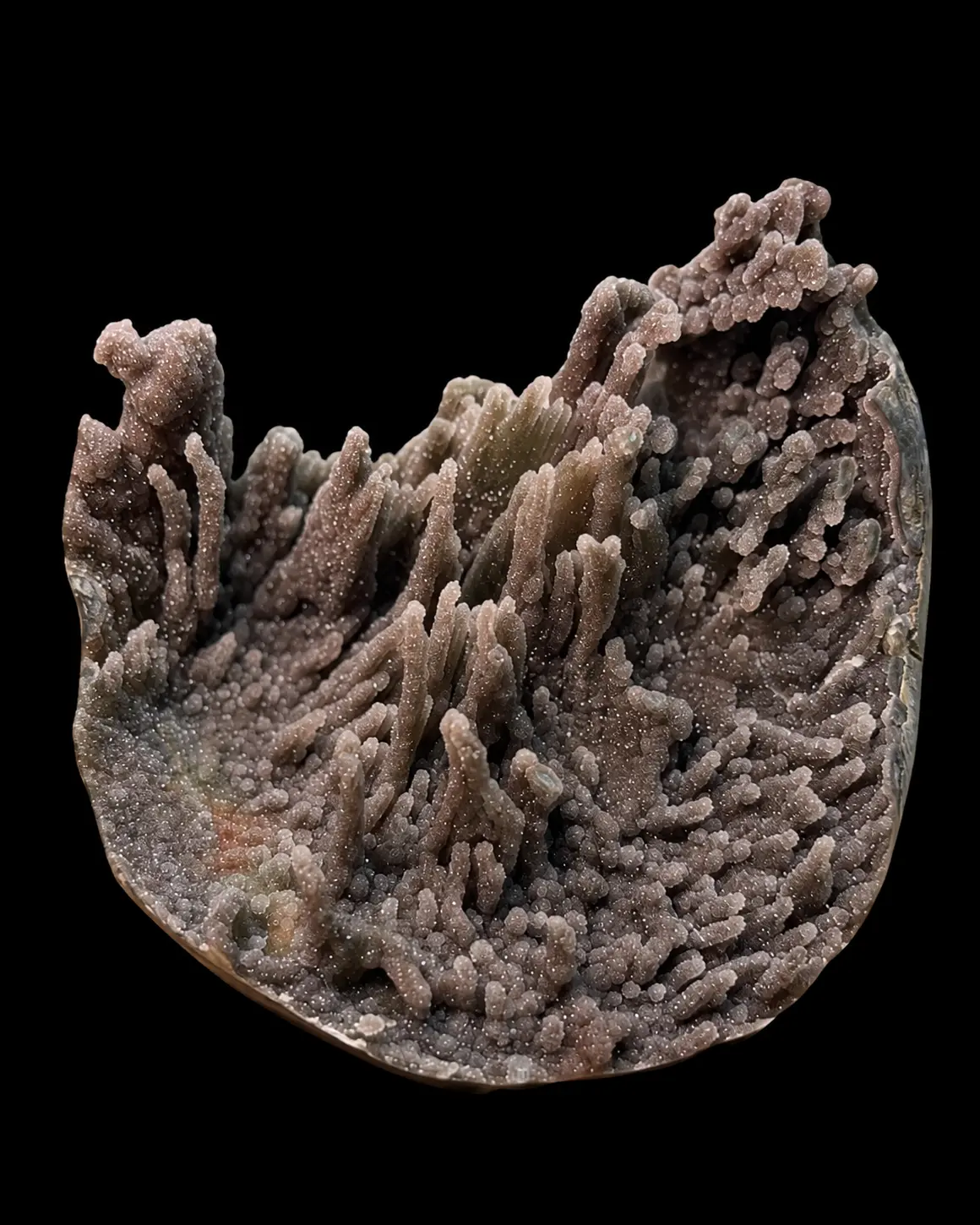
FV-MIN-002


Collection
Fossils, minerals and meteorites selected for preparation quality, scientific interest and presence.

Specimens are chosen for preparation quality and scientific interest before decorative appeal. Preference is given to material with recorded locality and collection data, and to preparation carried out by known hands. Restoration and composite mounting are stated plainly in every entry.
Fossils · Minerals · Meteorites
FV-MIN-002
FV-NH-0042
Preparation accounts for a great deal of what a specimen is worth, and for most of what can go wrong with it. A heavily prepared fossil in which the preparator has reconstructed detail that was never there looks better than an honest one and is worth considerably less. We ask who prepared a specimen, and we examine preparation under ultraviolet light, which shows adhesives and fills that are invisible in normal light.
Composite specimens, assembled from more than one individual, are common in some groups and are not always disclosed. We decline them, or we describe them as composite in the entry and price them accordingly.
A specimen with a recorded locality, horizon and collection date is a different object from the same specimen without them. The difference is permanent, because the information cannot be reconstructed later. We give the collection data we hold and we say plainly when it is absent or inferred rather than recorded.
Meteorites are a separate case. Classification by a recognised laboratory and an entry in the Meteoritical Bulletin Database are the baseline, and the official name and classification appear in the entry. An uncatalogued stone is described as uncatalogued.
Has it been restored, and where exactly. Is the matrix original to the specimen or has it been added. Is the locality recorded or inferred. For a meteorite, is it classified, and under what name.
These are reasonable questions and any dealer should be able to answer them in writing. If an answer is not forthcoming, that is itself an answer.
FV-NH-0055